
 On Sunday we enjoyed a walk through Rome's Municipal Rose Garden (Roseto Comunale di Roma) on the eastern slope of the Aventine Hill, overlooking the Circus Maximus. It was built on the site of an old Jewish Cemetery after the graves were moved to Rome’s main cemetery near the Basilica of San Lorenzo.
 The rose garden is split into two sections: the upper one shows the permanent collection of the many varieties of roses, arranged in a chronological plan. The lower part of the garden displays the different roses taking part in PREMIO ROMA, the annual competition among international rose growers.
 The garden preserves the memory of the old cemetery with pathways in the upper section in the shape of a menorah, and a pillar with a plaque depicting the Ten Commandments by each of the two entrances.
 Rome’s first Rose Garden was started by Mary Gayley Senni from Pennsylvania. With her own plants, and the support of the city’s fascist government, she opened a rose garden in 1932 next to the Colosseum. A year later, the first PREMIO ROMA was held.
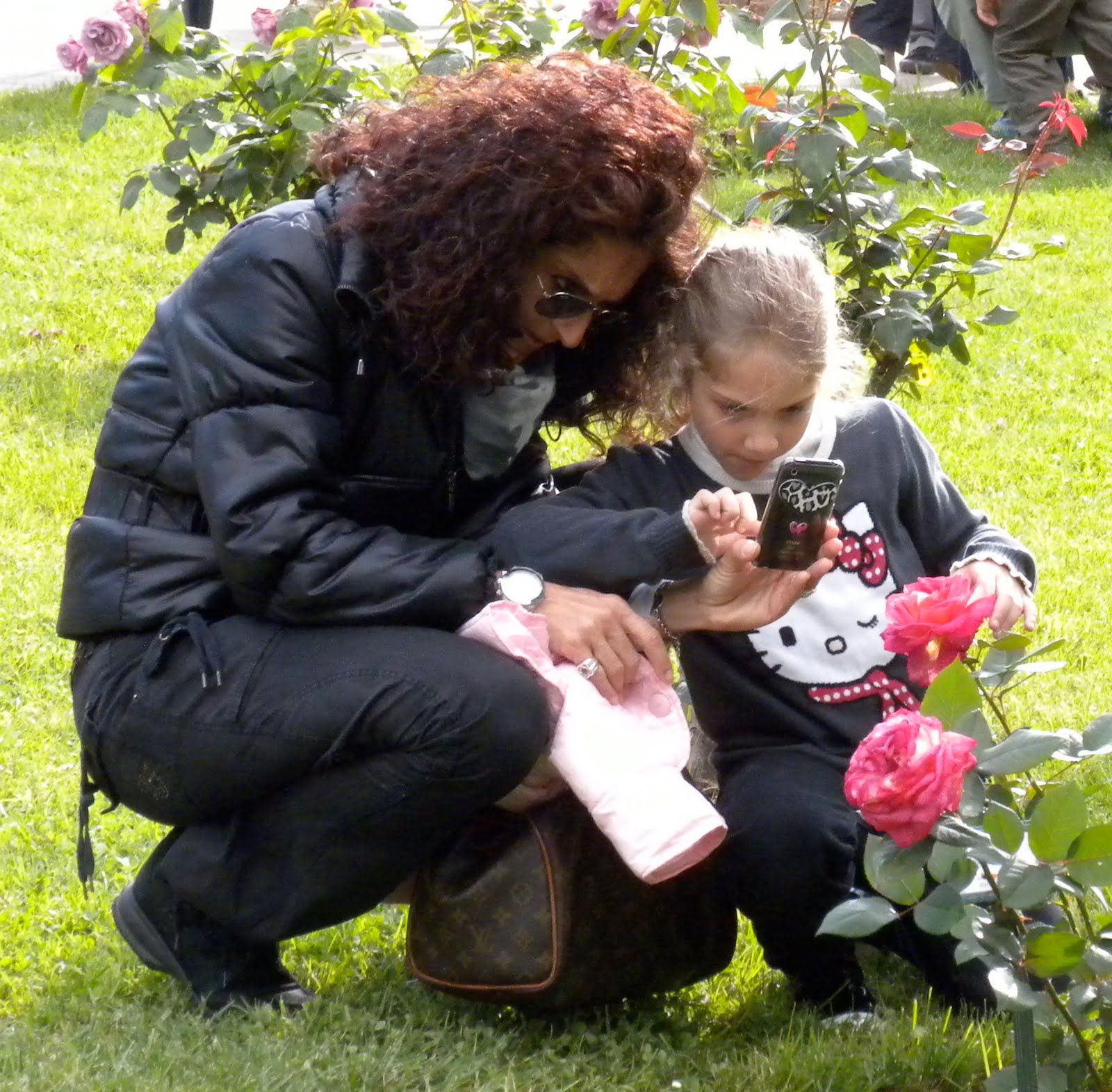 The garden is a wonderful place for young and old to take pictures.
 This mosaic in the walkway is a reminder
that the original rose garden was near the Colosseum.
 The garden is also an environment
that can encourage romantic activity.

 You can enjoy more than 1,000 different roses from over 20 countries.


