
 The Tomb of Cecilia Metella is probably the least visited of the famous monuments in Rome. It is featured in numerous paintings, old prints and photos of the Via Appia, yet because it is 3 miles out this ancient Roman road, few make the trek to see it.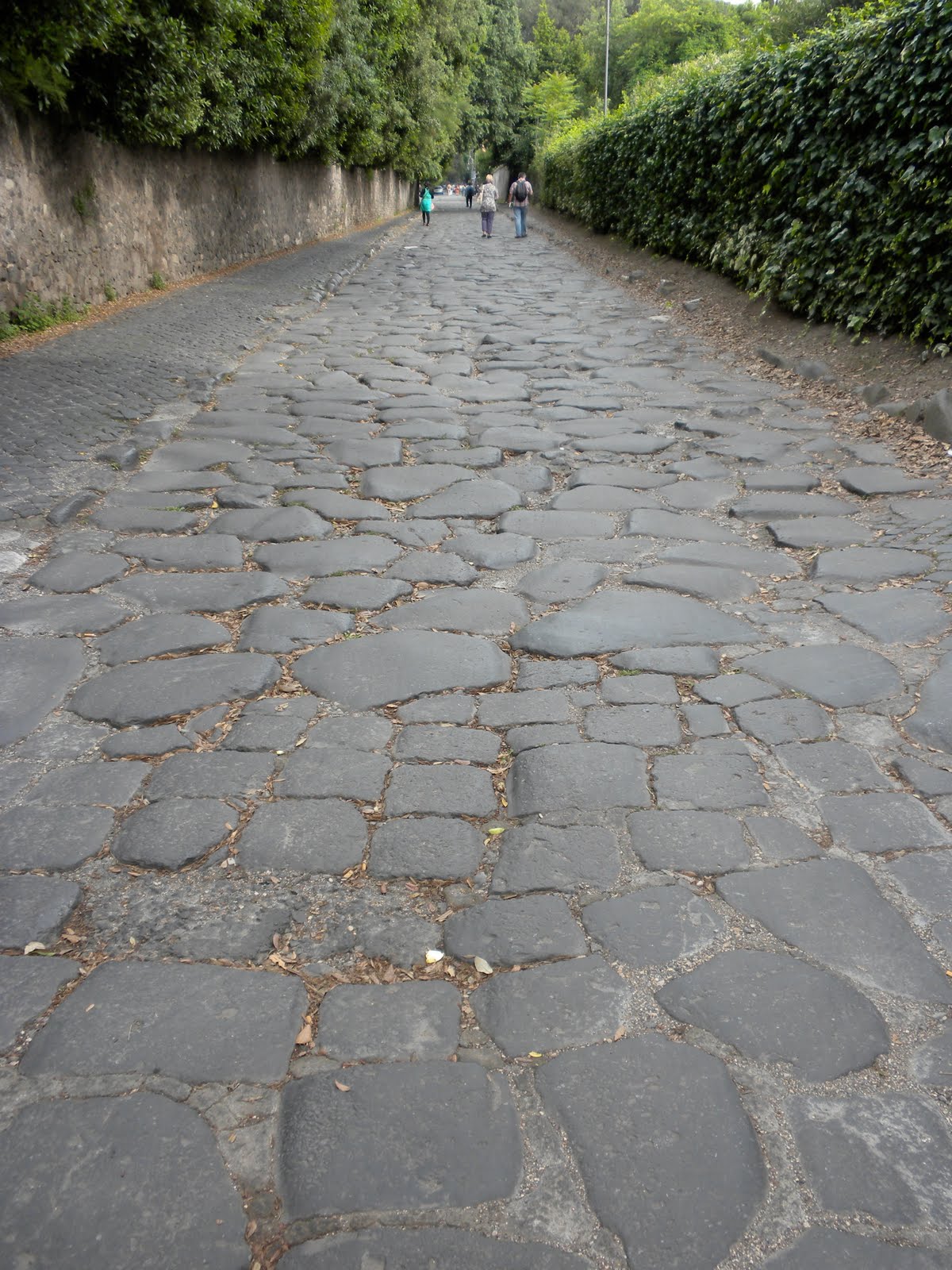
A section of Via Appia with the original paving stones
near the Tomb of Cecilia Metella.
As with many sites in Rome, there are many layers of history in this one place. The cylindrical tomb was built in the 1st century BC to celebrate the glory of the Metelli family and for the burial of Cecilia, the daughter of a counsul and general who conquered Crete, and the wife of a general in Caesar’s conquest of Gaul.
 The exterior of the cylinder was originally covered with travertine and had a decorative marble frieze at the top, all placed on a large rectangular base.
 The burial chamber was entered from the outside through a basement corridor and the interior was probably decorated with stucco work.
 Reliefs of oxen's heads were part of the decoration. In the Middle Ages these gave the area the name "Capo di Bove," Head of the Ox.
  During the Middle Ages the large tomb became an important checkpoint on the Via Appia. In the 11th century it was incorporated into the fortifications of a castle. The castle was restored in the 14th century by the Caetani family.
  In 1303 the Gothic church of San Nicola was built across the street as part of this fortified village.
 Today, inside the ruins of the castle, there is a collection of objects recovered from this part of the Via Appia.
Funerary Urns for Ashes
These statues would have been along the Via Appia as markers for the individuals who were buried nearby.


